Cat in Easter Basket Redwork Review
When I first opened the file for Cat in Easter Basket Redwork, I didn't just see a cute holiday graphic; I saw a potential bestseller for a spring boutique collection. As someone who spends hours testing files before putting them on a client's garment, my first impression was about mood and versatility. The design captures that specific whimsical energy of early spring without feeling cluttered or overly busy. It is clean enough to work on delicate baby clothes but sturdy enough to hold its shape on a heavy-duty tote bag.
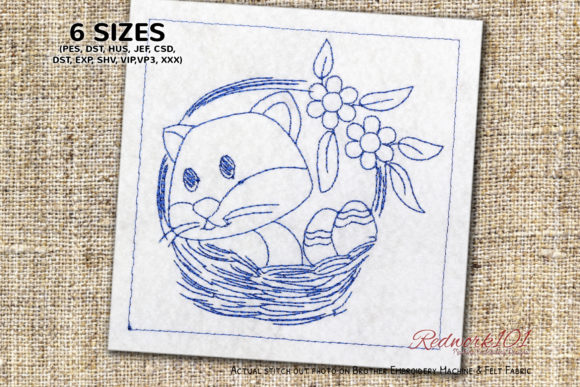
The redwork style, which typically relies on single-color outlines, gives this piece a timeless, folk-art feel. Unlike modern, multi-colored designs that can sometimes look dated after a few washes, this approach ensures longevity. The layout features a playful cat nestled inside an Easter basket, creating a focal point that draws the eye immediately. For a designer looking to create personalized gifts or seasonal merchandise, this visual personality is exactly what customers want to see on their social media feeds.
Real-World Application: From File to Finished Product
Let's talk about how this design performs when it leaves the screen and hits the hoop. I recently tested Cat in Easter Basket Redwork on a custom apron project for a local bakery that wanted to celebrate the upcoming holiday season. The goal was to add a touch of charm to their kitchen staff uniforms without overwhelming the existing branding. Because the design is primarily outline-based, it stitched beautifully on the cotton canvas fabric, maintaining crisp lines even through the thick weave.
The optional box stitch mentioned in the description adds another layer of flexibility. In many commercial projects, adding a border or frame can elevate a simple motif into a more finished product. However, the description notes that the color of the outer box might differ from the main thread count unless specified as part of the core design. This is a crucial detail for small business owners. If you are running a high-volume shop, skipping the box color can save time and thread, allowing you to focus on the primary image. But if you need that extra pop of contrast to make the design stand out against a dark background, knowing you have the option to include it is a significant advantage.
I also considered how this would translate to other common products. Imagine a set of matching tea towels for a wedding gift or a batch of embroidered patches for a craft fair booth. The simplicity of the redwork style means it requires fewer thread changes, which reduces the risk of machine errors during long production runs. This efficiency is vital for Etsy sellers and digital product creators who need reliable assets to scale their operations.
Where This Design Shines
- Custom Apparel: It works exceptionally well on sweatshirts and t-shirts where a centered chest logo is needed. The clean lines prevent the fabric from bunching up too much, keeping the garment comfortable.
- Baby Items: The soft, storybook aesthetic makes it perfect for onesies, burp cloths, or nursery decor. Parents love designs that feel gentle and nostalgic.
- Holiday Gifts: Whether it is a pillow cover or a kitchen towel, the Easter theme is timely and universally appealing, making it a great addition to seasonal collections.
- Small Business Merchandise: For boutique owners, this design offers a professional look that enhances brand consistency without requiring expensive, complex digitizing.
Navigating Potential Pitfalls
Even the most charming designs have limitations, and knowing where to be careful is what separates a pro from a hobbyist. While Cat in Easter Basket Redwork is versatile, it is not a magic bullet for every surface. One area to watch closely is the use of textured fabrics. If you are stitching onto a heavily napped fleece or a rough burlap, the fine details of the cat's outline might get lost in the texture. In these cases, the satin stitch areas might struggle to lay flat, resulting in a slightly uneven finish.
Stretchy fabrics present another challenge. Although the design itself isn't excessively dense, applying it to thin, stretchy materials like jersey knit without proper stabilization can lead to puckering. Always ensure you are using the correct stabilizer—cut-away for knits and tear-away for wovens—to maintain the integrity of the embroidery. Additionally, if you plan to use this on a curved surface like a cap, pay attention to the placement. Designs with large rectangular elements or boxes can distort when pulled over the curve of a hat, so test the curvature before committing to a full run.
Dense stitch areas can also be tricky if the original digitization includes tight fill stitches. If the design has any sections where the threads are packed very close together, it might create a stiff spot on the fabric. This could be uncomfortable for a baby's skin or noticeable on a lightweight summer shirt. Always inspect the stitch density in your software before sending the file to the machine.
Professional Designer Notes for Success
Before you start mass-producing items with this file, there are several practical steps you should take to ensure the highest quality result. First and foremost, always test the design on scrap fabric that matches your final product. This allows you to check thread color contrast and see how the design behaves under real-world tension.
If you are planning to sell finished products, review the licensing terms carefully. Some digital embroidery files come with restrictions on commercial use, meaning you cannot sell the physical items made from them. Confirming whether the license covers both personal and commercial projects is essential for protecting your small shop from legal issues. Also, compare the design in black and white mockups to ensure the visual weight remains balanced regardless of the thread color you choose.
Don't forget to check the hoop size requirements. While many files are scalable, some details might become illegible if you try to shrink the design too much for a small item like a patch or a child's bib. Conversely, enlarging it too much on a large hoodie might make the lines look blocky. Use your software to preview the design at the intended size to catch these issues early.
Final Thoughts on Value and Appeal
In the world of handmade products, presentation is everything. A well-executed embroidery design like Cat in Easter Basket Redwork signals professionalism and care to the buyer. It suggests that the maker took the time to select a high-quality asset that will last. When a customer receives a personalized gift or a boutique item with such clear, distinct stitching, it builds trust in the brand.
The design's ability to fit into various contexts—from a simple tote bag to a detailed nursery wall hanging—makes it a valuable addition to any digital library. It bridges the gap between traditional redwork aesthetics and modern holiday trends, offering a fresh take on a classic motif. By understanding its strengths and respecting its limitations, designers and entrepreneurs can leverage this file to create stunning finished products that resonate with their audience.
Whether you are a seasoned embroiderer or just starting your journey into the craft business, taking the time to evaluate a design's practical application is the key to success. With the right preparation and attention to detail, Cat in Easter Basket Redwork can become a staple in your collection, bringing joy and creativity to your next project.