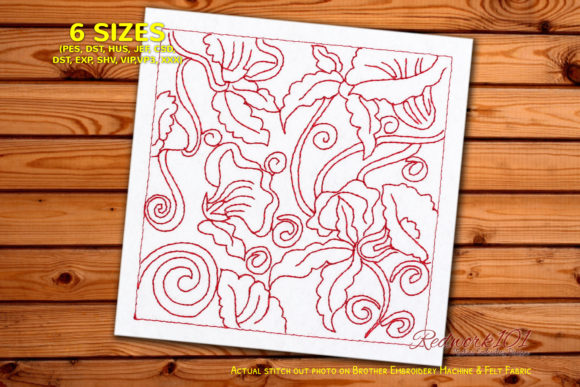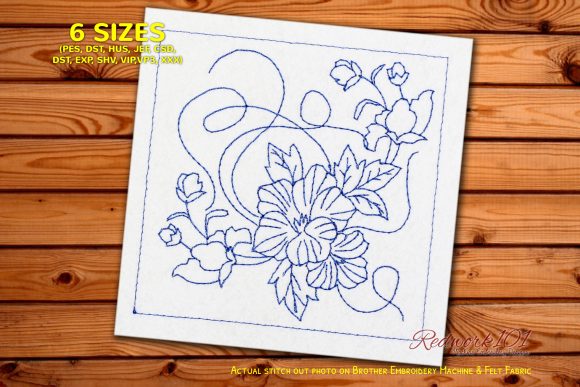
Flower Tree in Spring Redwork Review
As an experienced embroidery designer who has reviewed thousands of digital files for commercial production, I approach every new asset with a critical eye toward brand application. Today, I am evaluating Flower Tree in Spring Redwork, a design categorized under Single Flowers and Embroidery that promises versatility across various materials. For small business owners, Etsy sellers, and apparel decorators looking to elevate their merchandise, the decision to purchase a machine embroidery design is never just about aesthetics; it is about functionality, durability, and brand consistency.
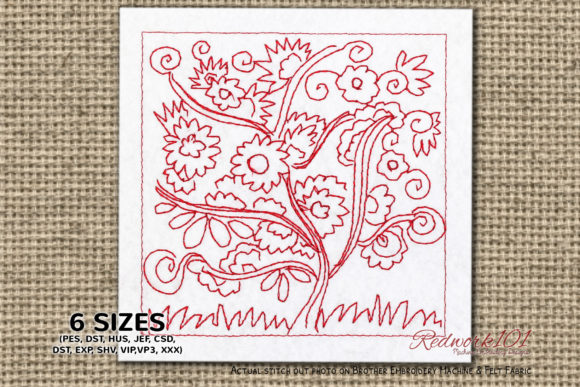
The first impression of Flower Tree in Spring Redwork suggests a design that balances rustic charm with professional polish. The title itself evokes a sense of renewal and natural elegance, which immediately signals potential for brands in the floral, bakery, boutique, or creative studio sectors. Unlike overly complex pictorial designs that can become muddy when stitched at small scales, redwork styles often rely on clean lines and singular color palettes, making them inherently safer for high-volume production. When visualized as a finished product, this design feels friendly yet sophisticated, capable of bridging the gap between handmade authenticity and corporate uniformity.
Real-World Application for Small Business Merch
In my experience reviewing digital embroidery files for commercial projects, the true test of a design lies in its adaptability. Flower Tree in Spring Redwork presents a compelling case for use as an embroidered patch, a chest logo accent, or a subtle sleeve detail. Imagine a local café owner wanting to brand their staff aprons; this design offers a soft, organic focal point that humanizes the uniform without overwhelming the wearer. Similarly, for a florist or pet brand, the spring theme aligns perfectly with seasonal collections or customer gift items.
The description notes that the design stitches well on "any material," which is a crucial claim for any digital embroidery file buyer. In practice, this versatility allows the design to function effectively on diverse substrates. For tote bag design applications, the clean outlines of Flower Tree in Spring Redwork will hold up well against canvas textures, providing a premium look that encourages customers to reuse the bag. On cap embroidery, the design's structure appears suitable for curved surfaces, provided the stitch density is managed correctly. It also serves as an excellent branded product add-on, such as a label stitched onto the hem of a handmade shirt or a decorative element on custom packaging accents.
For event merch and craft business assets, this design stands out because it does not require complex color changes to achieve visual impact. A single-color thread variation can create a striking contrast on dark uniforms or a delicate touch on light linens. This simplicity reduces production time and minimizes the risk of thread breaks during commercial embroidery runs, making it a cost-effective choice for businesses scaling their operations.
Strategic Considerations for Brand Identity
When integrating Flower Tree in Spring Redwork into your brand identity, you are making a statement about your company's values. The design communicates a connection to nature, craftsmanship, and attention to detail. For a handmade product line, using this design on finished products reinforces the artisanal quality of the goods, potentially increasing perceived value and customer trust. Visual consistency is key in marketing, and having a reliable design asset like this ensures that your embroidered patches, work shirts, and product labels all speak the same visual language.
However, designers must be strategic about where they apply this design. While it excels as a mid-sized accent, caution is advised when attempting to shrink it for tiny lettering or extremely small patch sizes. If the design includes intricate details within the flower tree motif, reducing it too far may cause the stitches to merge, losing the definition that makes the design appealing. Furthermore, on highly textured fabrics or dark uniforms, the single-color nature of redwork might get lost if the thread color selection is not carefully considered. Proper thread colors are essential to ensure the design pops against the background fabric.
Technical Notes from a Designer's Perspective
Before committing to a large production run, I always recommend a rigorous testing phase. My first step with Flower Tree in Spring Redwork would be to digitize a test sample in black and white to evaluate the stitch flow and spacing. This helps identify any potential issues with pull compensation or thread tension before introducing specific thread colors. It is vital to check if the design works at your intended small patch size; if the final output looks cluttered, you may need to simplify the digitization or adjust the hoop size to accommodate the design better.
Inspecting the spacing and confirming the hoop size are non-negotiable steps. A design that fits perfectly in a 4x4 hoop might not translate well to a larger garment area without repositioning or resizing. Always test on real fabric rather than paper mockups to understand how the stabilizer interacts with the material. Using the proper stabilizer is critical for maintaining the integrity of the embroidery, especially on stretchy fabrics like those found in work shirts or caps. If the fabric texture is coarse, the design may need additional underlay stitches to sit flat.
Create a printable mockup for client approval before sending anything to the production floor. This allows stakeholders to visualize how Flower Tree in Spring Redwork will look on the actual product, whether it is a tote bag design or an apron embroidery project. Compare the design beside other design assets in your collection to ensure it complements your existing branding without clashing. Finally, confirm commercial licensing terms before business use. While the description mentions that the Stitch Box shown in the picture is optional and the outer box color may vary, these details do not affect the core embroidery file. However, you must verify the exact license agreement to ensure you have the rights to use the design on merchandise for sale.
Maximizing Value in Custom Apparel
Ultimately, the success of Flower Tree in Spring Redwork depends on how well it is executed. By paying attention to stitch density, thread colors, and fabric selection, small business owners can transform a simple digital embroidery file into a powerful marketing tool. Whether used for customer gifts, event merch, or daily staff uniforms, this design has the potential to enhance your brand's visual presence. Just remember to review the specific file details regarding format and dimensions, as these technical specifications will dictate the final outcome of your commercial embroidery project.
For those seeking a design that blends classic redwork aesthetics with modern commercial utility, Flower Tree in Spring Redwork is a strong contender. Its ability to adapt to various applications—from embroidered patches to tote bag design—makes it a valuable addition to any designer's library of design assets. With careful planning and execution, this design can help elevate your small business merch and create a lasting impression on your customers.