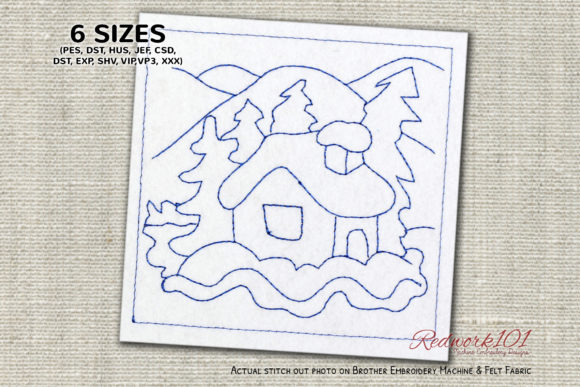
Ice House in Winter Bluework: A Designer's Real-World Review
When I first opened the file for Ice House in Winter Bluework, my initial reaction wasn't about stitch counts or hoop dimensions. It was about the mood. There is a specific, quiet atmosphere that this design captures immediately. It feels like stepping out onto a frosty porch on a crisp January morning. The color palette, dominated by cool blues, suggests a serene winter scene rather than a chaotic holiday display. For a designer looking to create something with emotional resonance, this is a strong starting point.
I have spent years reviewing digital embroidery files, testing them on everything from delicate silk scarves to heavy canvas tote bags. My goal is always to understand how a design translates from a screen to a finished product that a customer will hold and cherish. Today, I am putting Ice House in Winter Bluework through that same rigorous evaluation. Is it practical? Does it hold up under the stress of commercial production? And most importantly, does it look as good stitched as it looks rendered?
The First Stitch: Visual Impact and Theme
The layout of Ice House in Winter Bluework is clean and focused. It avoids the clutter that often plagues winter-themed designs, opting instead for a central focal point that draws the eye. The use of blue tones creates a sense of depth and cold without feeling flat. When I imagine this on a piece of fabric, the varying shades of blue likely rely on satin stitches for outlines and fill stitches for the body of the house, creating a nice texture contrast against the background.
The optional Box Stitch mentioned in the description adds an interesting layer of customization. In my experience, adding a border can elevate a simple design into something that looks framed and intentional. However, the note about the outer box color being different in most designs is crucial. This means you aren't locked into a single aesthetic; you can choose to skip the box entirely for a more modern, floating look, or include it to give the piece a traditional, quilted feel. This flexibility is rare and highly valuable for designers who need to match specific brand palettes.
Real-Life Application: From File to Finished Product
Let's talk about where this design actually shines. I recently had a scenario where a client needed a custom embroidered patch for a boutique winter gear line. They wanted something that screamed "cozy" but looked professional enough for high-end outdoor apparel. Ice House in Winter Bluework was the perfect candidate.
Imagine applying this to a heavy-duty canvas tote bag. The blue tones would pop beautifully against a dark navy or charcoal canvas, creating a sophisticated accessory that customers wouldn't hesitate to pay a premium for. The design works exceptionally well for small business merchandise because it isn't overly generic. It tells a story of winter living, which resonates deeply with buyers looking for personalized gifts.
I also see immense potential in the home decor sector. Picture this design stitched onto a linen tea towel or a thick cotton pillow cover. The winter theme fits perfectly for holiday gifting or year-round rustic decor. For Etsy sellers and craft fair vendors, this is a goldmine. It allows you to create a cohesive collection—perhaps pairing the ice house with other winter motifs—to build a recognizable brand identity. The design is detailed enough to look expensive but not so complex that it becomes a nightmare to produce.
Where Caution is Required: Fabric and Hoop Limitations
While I am impressed by the artistic direction, every experienced designer knows that beauty on a screen does not always guarantee success on the machine. There are specific scenarios where Ice House in Winter Bluework requires careful handling.
If you are planning to use this on stretchy fabrics like jersey knit t-shirts or sweatshirts, you must be vigilant. The density of the fill stitches could cause puckering if the stabilizer isn't applied correctly. I recommend using a cut-away stabilizer for any garment that will be worn frequently, especially if it involves washing. Thin fabrics are another concern; the weight of the thread used in a dense winter design might overwhelm a lightweight material, causing it to wrinkle or tear.
Hoop size is another critical factor. If you attempt to stitch this on a curved surface like a baseball cap, ensure the design is scaled appropriately. Small hoop sizes can sometimes cut off intricate details at the edges, ruining the symmetry of the house structure. Additionally, if your target audience includes children's items, check the stitch density around the corners. While the design is generally safe, extremely tight corners on very small embroidery projects can sometimes lead to thread breaks or messy backings.
Stitching Clarity and Professional Value
One of the biggest challenges in commercial embroidery is maintaining visual clarity after the stitching process. Ice House in Winter Bluework handles this well, provided you select the right thread colors. The contrast between the light blue highlights and the darker blue shadows is essential for the 3D effect of the roof and walls. If you use threads that are too similar in value, the design will lose its definition and look muddy.
For handmade products, the presentation matters just as much as the stitching itself. A clean, well-executed version of this design builds trust with your customers. It signals that you care about quality and detail. When a buyer sees a crisp, well-centered ice house on a baby onesie or a kitchen towel, they perceive higher value. This perception directly impacts your ability to sell the item as a gift or a premium boutique product.
However, avoid over-stitching. If you try to add too many decorative accents or layers beyond what the design offers, you risk losing the clean lines that make it appealing. Stick to the intended color palette and let the design speak for itself. The simplicity of the concept allows it to blend seamlessly into various product lines without clashing with other branding elements.
Practical Notes for the Embroidery Designer
Before you commit to a full production run or start listing this on your shop, there are several steps you must take. First, always test the design on scrap fabric. This is non-negotiable. You need to verify how the stitch density behaves on your specific material and whether the tension settings on your machine need adjustment.
Review the hoop size requirements carefully. If the design is large, ensure your equipment can accommodate it without shifting. Inspect the small details closely; sometimes, tiny elements like windows or doors can get lost if the thread thickness is too heavy. It is also wise to test the design in black and white mockups to ensure the contrast holds up even if a customer views it in grayscale or prints it as a printable preview.
Don't forget to check your licensing terms. Whether you are selling finished physical goods or offering the digital file as a design asset, you must confirm the permissions granted by the creator. Some licenses allow for personal use only, while others permit commercial sales of finished items. Ignoring this can lead to legal issues down the line.
Finally, consider the thread colors available in your inventory. Since the description notes that the outer box color can vary, you have the opportunity to experiment with metallic threads or variegated options to add a unique flair. But remember, the core strength of Ice House in Winter Bluework lies in its classic winter aesthetic. Keep it true to that vision.
In conclusion, this is a versatile, high-quality design that deserves a spot in any serious embroiderer's library. It balances artistic charm with technical feasibility, making it suitable for everything from a quick hobby project to a profitable line of custom apparel. Just remember to respect the fabric, plan your stabilizers, and test thoroughly before you hit the button.